


For decades, the cloud operated on a simple promise: send your data to a massive, centralized data center, let a cluster of powerful servers process it, and wait for the result to travel back to your screen. It was a revolutionary upgrade from maintaining physical server closets in office basements.
But as web applications grow increasingly interactive and global, the physical distance between users and those centralized data centers has created a massive bottleneck: speed.
The software industry is undergoing a massive architectural shift to solve this issue. We are moving away from monolithic data centers and shifting toward Serverless Edge Computing.
What is Edge Computing?
To understand the edge, think of how a massive global retail chain operates. If every single customer support question, inventory check, and checkout swipe had to be approved by a single corporate headquarters office in Ohio, the entire operation would grind to a halt. Instead, retail chains empower local store branches to make decisions independently.
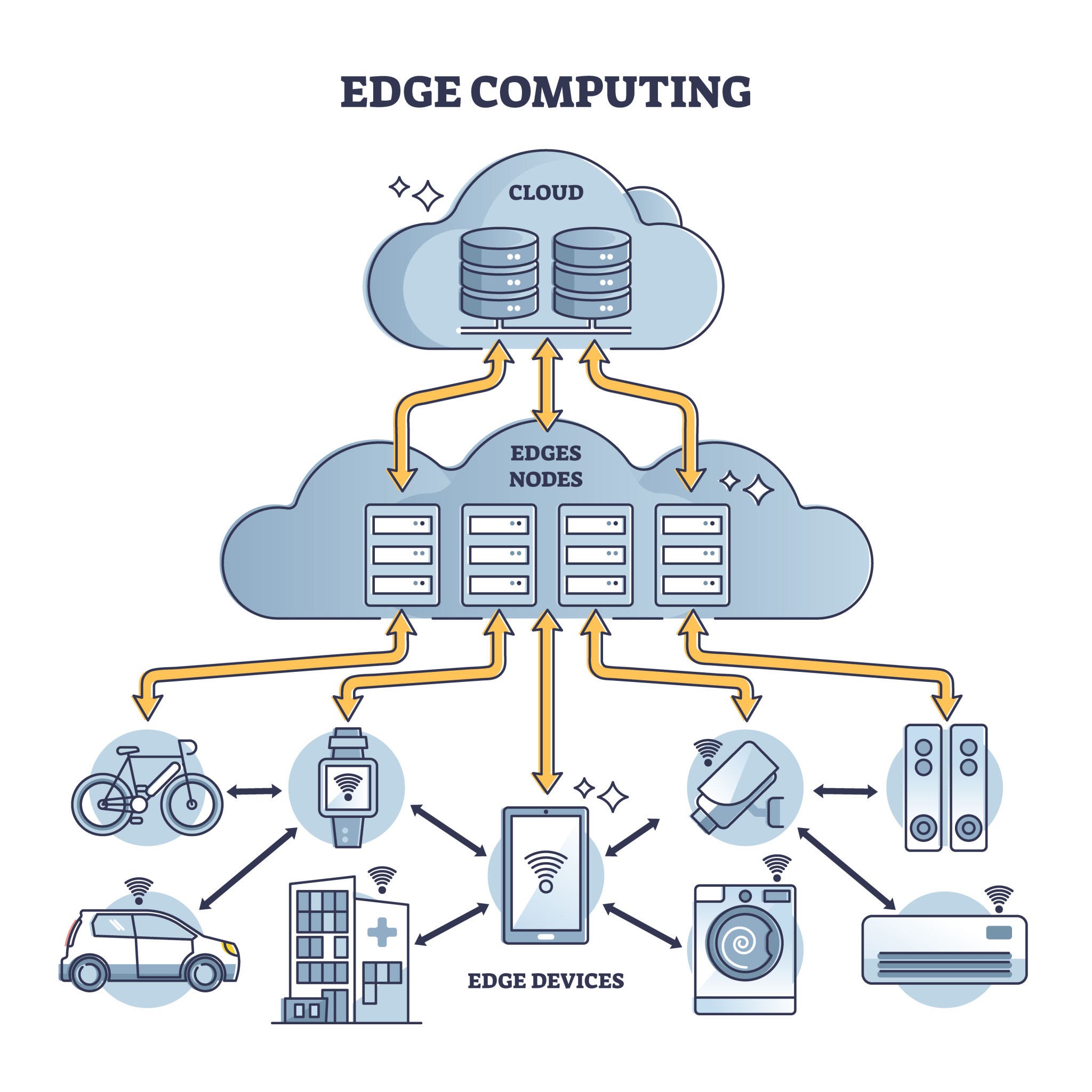
Edge computing applies this exact principle to web infrastructure. Instead of routing a user's request across an entire ocean to a primary server, the application logic runs on a mini-server located just a few miles away from the user's physical device.
The Core Benefits of Shifting to the Edge
By bringing data processing closer to the user, web application architectures gain major upgrades across performance, scale, and operational simplicity.
Near-Zero Latency: Latency is the delay before a transfer of data begins following an instruction. By executing code at the closest network terminal, you eliminate the physical transit time of data packets traveling thousands of miles. Responses feel instant.
Zero Server Management: Because this architecture uses a serverless model, developers do not need to configure operating systems, scale hardware virtual machines, or worry about server capacity. The network provider automatically scales the compute resources up or down on demand.
High Availability by Default: If a centralized cloud data center goes offline, the entire application crashes for everyone. On an edge network distributed across hundreds of global nodes, if one local node fails, the traffic is seamlessly re-routed to the next closest healthy node without downtime.
Architectural Comparison: Centralized vs. Edge
To understand how drastically this changes web infrastructure, look at how the execution model shifts across core application requirements:
Architectural Metric | Traditional Centralized Cloud | Modern Serverless Edge |
Primary Location | A few massive regional data centers | Thousands of global network distribution points |
Cold Start Times | Can take several seconds to boot an idle container | Near-instantaneous execution (often under 10 milliseconds) |
Data Compliance | Difficult to manage when data must cross international borders | Easier compliance by processing data entirely within local jurisdictions |
Traffic Surges | Requires manual or automated auto-scaling rule adjustments | Inherently scales to absorb massive regional traffic spikes instantly |
The Trade-offs: When Not to Use the Edge
While running code at the edge sounds like an absolute win, it is not a silver bullet for every software problem. The distributed nature of the network introduces unique technical constraints.
The Data Consistency Dilemma: Writing data at the edge is fast, but syncing that data across thousands of global nodes takes time. If a user in New York updates their account profile, a user in London might see the old data for a brief window until the entire global network achieves eventual consistency.
Because of this, applications that require heavy, complex computational processing—such as deep learning model training, intense video rendering, or massive multi-table relational database operations—are still significantly better suited for traditional centralized cloud environments.
Final Thoughts
The edge is fundamentally changing how web developers design digital products. By stripping away server management and destroying network latency, software engineers can build real-time, highly contextual digital experiences that feel as responsive as local desktop applications.
The question is no longer whether your application should leverage the edge, but rather which specific parts of your user experience can benefit from being brought closer to the end user.


