


Quick Answer
Digital marketing should be given a larger portion of the budget for most home improvement businesses than traditional marketing, which will play a supporting role. When it comes to a comparison between traditional marketing and digital marketing, digital channels such as local search ads, Google Business Profile, and social media reach homeowners who have an idea about the projects they want to undertake. It keeps track of all leads and presents your completed projects in visual form. Yard signs, vehicle wraps, and mailers also help in building local visibility.
A homeowner planning a kitchen remodel used to find a contractor through a newspaper ad, a flyer on the door, or a neighbour’s recommendation. Today that same homeowner opens their phone, searches "kitchen renovation near me" and scrolls through reviews. Checks Instagram for before-and-after photos before making that single call. This transition is at the core of the traditional marketing vs digital marketing debate, and when it comes to home improvement companies, selecting the correct combination will determine whether your crew stays booked or sits idle between jobs.
This article explains how both of these methods work, where their budgets come from, and how to create a pipeline of leads that will keep you busy.
What Separates Traditional Marketing From Digital Marketing?
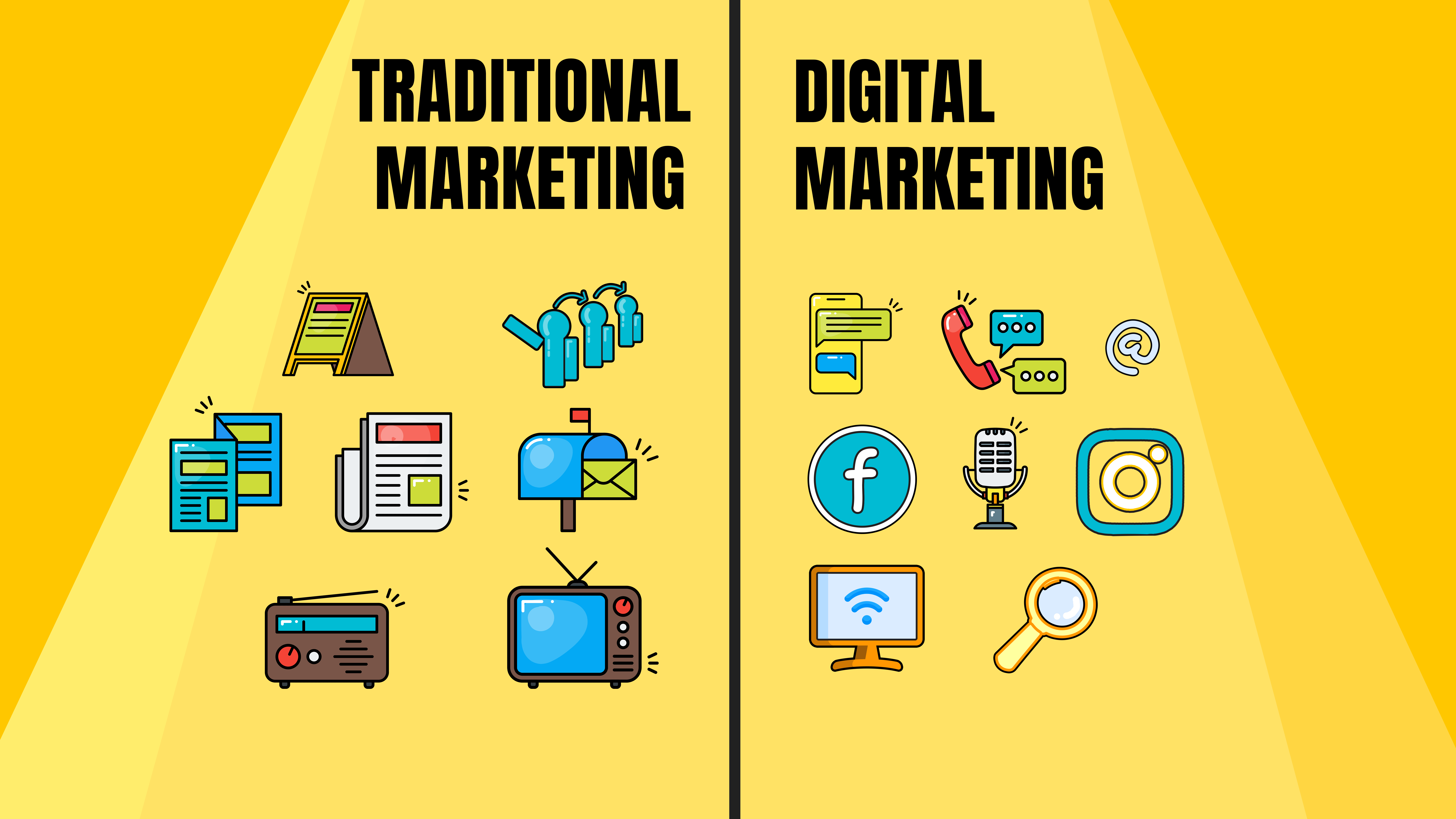
Traditional marketing includes the use of marketing mediums such as print advertising, billboards, radio, direct mail, lawn signs, vehicle wraps, and trade shows. Offline marketing mediums help get your message across to a range of people using repetition to create awareness.
Digital marketing includes marketing mediums such as search engines, social media, pay‑per‑click advertising, emails, websites, and review sites. Online marketing mediums help you reach people based on their queries and demographic information.
The key difference is control. With marketing, you pay for the medium and hope the right people see it. With digital marketing, you choose who sees your advertisement.
Traditional Advertising vs Digital Advertising: A Side-by-Side Look
Factor | Traditional Advertising | Digital Advertising |
Targeting | Broad (everyone in a region or audience) | Precise (location, homeowner status, interests, search intent) |
Cost to start | High upfront (print runs, airtime, billboard leases) | Flexible (start small and scale what works) |
Tracking | Hard to measure beyond call volume estimates | Every click, call, and form fill is trackable |
Speed of changes | Slow (reprint or rebook) | Instant (edit ads, pause campaigns, test new offers) |
Visual storytelling | Limited to one image or short script | Photo galleries, videos, reels, project walkthroughs |
Lifespan | Ends when the ad stops running | Content and reviews keep working long after posting |
Where Traditional Marketing Still Earns Its Place
Skipping marketing channels entirely would be a big mistake. There are still a few methods that are effective for contractors:
Yard signs on active job sites: Local residents see what you are doing, and an ongoing project speaks volumes about your business.
Branded vehicle wraps: Your truck parks in driveways all over town, building recognition every day at no extra cost.
Direct mail to targeted neighbourhoods: Postcards sent to houses or recently sold homes are still reaching the right people.
Referral relationships: The best source of leads in this industry continues to be word‑of‑mouth referrals.
The common thread here is that traditional marketing works best when it is local, visible, and tied to real projects. Broad newspaper and radio buys rarely pay off for smaller renovation firms anymore.
Why Digital Wins for Home Improvement Lead Generation
When it comes to cost per booking, digital marketing channels are always more effective for the majority of home improvement companies. Here’s why.
You Connect With People Who Are Already Shopping For Your Services
If someone Googles “cost of bathroom remodel” or “deck builder near me,” they are actively looking for your services. Google ads and SEO will help you get in touch with them when they need you the most. A billboard can’t do this. Intent-based targeting is the most important benefit of digital marketing for contractors, and that’s why so many businesses invest in home renovation advertising campaigns built around local search intent.
Every Dollar Is Measurable
Digital platforms allow you to see which advertisement generated which call, how much each lead costs, and which services generate the most valuable leads. Basement finishing leads that cost half the price of roofing leads mean you can allocate your budget accordingly right away. This kind of analysis transforms guesswork into a predictable process for generating home improvement leads.
Visual Proof Sells Renovations
Home improvement is a visual purchase. Your prospective clients want to see your finished kitchens, tiling, and workmanship before they let you into their home. Social media offers you the chance to show many projects that you have done, video tours of them, and even customer testimonials in one place. An effective social media marketing strategy turns each and every one of your projects into a marketing opportunity that will continue for many months.
What Effective Online Marketing for Contractors Looks Like
Strong online marketing for contractors isn’t about being everywhere. It is about making a marketing strategy that works together so each channel helps the others:
A quick, mobile-friendly website that has pages for services, a gallery of projects, and a simple form for people to ask for a quote.
A thorough Google Business Profile that includes photos of the areas you serve and regular reviews.
Local search ads that target phrases where customers are ready to buy in your service area.
Social media posts that show pictures of finished projects, pictures of employees, and words from clients.
Retargeting ads that remind people who visited your website about your business while they look at quotes.
Follow up on leads with calls, texts, or emails so the warm leads do not cool off.
Most contractors don’t have time to run all of this while managing crews and job sites. That’s where a specialized home improvement marketing agency adds value since the team already knows which platforms, offers, and creatives convert in the renovation space.
How to Blend Both Approaches Without Wasting Budget
The smartest home improvement businesses don’t pick one side. They allow digital to handle the work of generating leads and rely on traditional methods to build up local presence.
The following breakdown should apply to most small to mid-sized renovation firms:
Put the majority of your budget into digital: search ads, social media, and local SEO, since these produce trackable, high-intent leads.
Keep a smaller share for traditional: yard signs, vehicle branding, and targeted mailers in neighbourhoods where you’re already working.
Connect the two: add a QR code or short web address to your signs and mailers so offline attention flows into your online funnel, where you can track it.
Review your numbers monthly. Cut channels that don’t produce booked jobs and move that money into the ones that do.
Conclusion
The traditional marketing vs digital marketing question has a clear answer for home improvement businesses in 2026: digital should take the lead, while traditional should support it. People look on the Internet for information even before they make the call, so your company needs to be there, presenting your work to them.
At Bluegen Studios, we help renovation companies, contractors, and home service brands turn that research stage into booked consultations. When you're trying to find the best marketing services to help your contracting business grow, make sure you choose one that really knows your industry, keeps in touch with every lead, and creates campaigns that focus on the types of jobs you want to land.
Frequently Asked Questions
Is digital marketing better than traditional marketing for contractors?
Yes, for the vast majority of contractors, digital marketing generates more leads per dollar since it focuses on homeowners actively looking for renovation services. In addition, it provides tracking all the way to call and form submission levels. Traditional marketing will help with branding in the local community by using job site signage and branded vehicles.
How much should a home improvement business spend on marketing?
The typical home improvement company spends somewhere around 5-10% of its annual revenue on marketing, while new companies that want to grow fast are usually at the higher end of that range. Allocate the largest portion of this budget to digital marketing through paid search and social media. Allocate less money for local traditional marketing.
What is the fastest way to get home improvement leads?
Paid search ads are the fastest way to generate leads for home improvement since they make your company visible to people searching for your services instantly. Local Services Ads and Google Search campaigns can start generating calls within a few days after going live. SEO and social media require more time but will provide a steady flow of leads.
Does social media marketing work for renovation companies?
Yes, social media marketing is effective for renovations, as the home improvement service is a visual purchase. Both before-and-after images, videos, and reviews show the level of your work better than anything else can. Also, paid social advertising enables you to target homeowners in specific neighborhoods and income categories.
Should I hire a home improvement marketing agency or do it myself?
If you feel that you cannot dedicate your time and experience to handling your advertisements, content, and analytics, then hire a marketing firm that specializes in home improvement. These people know what works in the trade. You can run your own campaigns for a tiny business, but it will be much more expensive than using the services of an agency.


